For many guests — and especially for anyone staying longer than a weekend — the kitchen is one of the most important rooms in an Airbnb. It’s where they start the day, decompress in the evening, and make a temporary space feel like somewhere they actually live rather than just sleep.
A kitchen that works well is one of those things guests don’t consciously notice. A kitchen that doesn’t work well is one of the first things they mention in a review.
After years of cooking in Airbnb kitchens across multiple countries, the same frustrations come up again and again — not dramatic failures, but small, avoidable oversights that add friction to daily life and quietly accumulate into a less-than-5-star stay. Here’s what they are, and exactly how to fix each one.
1. A Kitchen That Looks Equipped But Isn’t
This is the most common kitchen mistake in Airbnb listings, and the most frustrating one to encounter as a guest. You arrive to find a kitchen that appears well-stocked — shelves with plates, a drawer full of utensils, pots on the hob. And then you try to actually cook something.
The knives don’t cut. The pan sticks badly on one side. There’s a colander but no saucepan lid. There are four wooden spoons but no spatula. The can opener is so old it barely works. Everything is technically present and nothing is actually functional.
Guests who encounter this don’t usually complain directly. They adapt — they push through it, they cut around the blunt knife, they make it work. But the frustration registers, and it surfaces in the review in the language of “the kitchen was a bit basic” or “not ideal for cooking proper meals.”
The fix: Go through your kitchen with fresh eyes — or better yet, ask someone unfamiliar with it to try cooking a simple meal and report back. The standard to aim for is not quantity but quality. One sharp knife that actually cuts is worth more than four blunt ones. One good non-stick pan in working condition is worth more than three worn-out ones. Audit and replace rather than accumulate.
2. Missing the Basics That Make Cooking Possible
There is a set of items so fundamental to cooking that guests assume they’ll be there — and feel genuinely wrong-footed when they’re not. These aren’t extras or nice-to-haves. They’re the baseline that turns a kitchen from a decorative feature into something a person can actually use.
The most commonly missing basics we’ve encountered across years of Airbnb stays:
- A sharp knife and a chopping board — without these, preparing almost any meal is either impossible or genuinely dangerous
- A frying pan and a saucepan — the two pieces of cookware that cover the vast majority of what anyone cooks
- A spatula — missing more often than you’d believe
- Salt, pepper, and cooking oil — arriving after a long journey and discovering you can’t season anything or cook without going straight back out to a shop is one of those small frustrations that sets a negative tone early
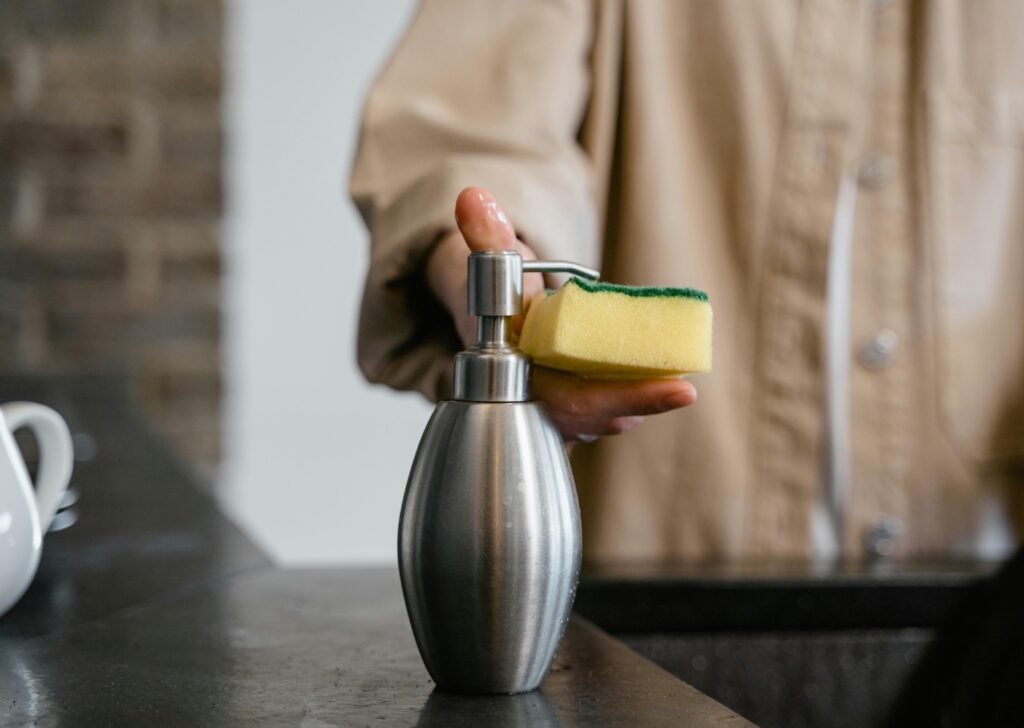
- Dish soap and a usable sponge — not optional; basic kitchen hygiene requires these
For longer stays, the list extends: a tin opener, a grater, a colander, a lid for the saucepan, a kettle or coffee maker. But the short list above is the absolute minimum that every kitchen offering cooking facilities should have.The fix: Walk through the kitchen and ask yourself honestly — could a guest cook a simple pasta dish tonight with what’s here? If the answer involves any hesitation, address it. Leaving a small bottle of olive oil, a salt and pepper set, and a basic washing-up kit costs almost nothing and removes the friction from the first evening of every stay.
3. A Kitchen That Doesn’t Support Real Use
Some Airbnb kitchens are styled for the listing photos and not much else. Everything is positioned aesthetically — plants on the counter, decorative bowls, artful arrangements of items that look beautiful and get in the way of actually doing anything.
The problem reveals itself the moment a guest tries to prepare a meal. There’s no clear counter space to chop on. The utensils are stored decoratively rather than accessibly. The equipment that’s visible is ornamental; the equipment that’s functional is hidden in a cupboard with no indication it exists.
A kitchen that works for living has clear, uncluttered prep space. It has frequently used items within easy reach. It has storage that makes sense — cooking equipment near the hob, eating equipment near the table, cleaning equipment near the sink. This sounds obvious, but it’s surprising how often the logic breaks down when a kitchen has been set up by someone who doesn’t cook in it regularly.The fix: Clear at least one full section of counter for food preparation. Store the decorative items somewhere that doesn’t interfere with working space. Make sure the most-used items — a knife, a chopping board, pans, a spatula — are in the first place a guest would look for them, not buried behind rarely used equipment.
4. The “Where Is Everything?” Problem
Guests arrive in your kitchen with no prior knowledge of how it’s organised. They don’t know which drawer has the cutlery, which cupboard has the glasses, or where you keep the bin bags. Every time they need something they haven’t found yet, they open three wrong doors first.
This is a minor friction individually. Over a stay of several days — and particularly over a stay of several weeks — the accumulated time spent searching for things becomes genuinely irritating. It’s one of those background frustrations that guests can’t always name but that contributes to a stay feeling slightly effortful rather than easy.
The fix: Organise the kitchen the way a guest would instinctively expect it to be organised, not the way it happened to end up. Cutlery near the dining area or hob. Glasses near the sink. Pots and pans near the cooking area. Bin bags in or near the bin. Then add a short note in your welcome guide indicating where anything non-obvious lives — “spare bin bags are under the sink, tea towels are in the second drawer.” One sentence per item, only for the things a new person genuinely wouldn’t find immediately.
5. Cleaning Supplies That Are Missing, Hidden, or Inadequate
Guests expect to clean up after themselves. Most will do so willingly and without prompting — they’re not looking for a cleaning service, they just want to leave the kitchen in reasonable order after each meal. But if the supplies to do that aren’t clearly available, a small discomfort sets in.
A missing sponge means using a tea towel to wipe the pan. No dish soap means rinsing with water only. No extra bin bags means the bin fills up and there’s nothing to replace it with. None of these is a crisis, but each one is a small failure of preparation that guests notice.
The fix: Keep a visible, usable sponge and dish soap at the sink at all times — replace these between every stay, not just when they run out entirely. Put a spare roll of bin bags somewhere accessible and obvious — under the sink is the first place any guest will look. Add a clean, dry tea towel that’s clearly for kitchen use. These items together cost almost nothing and complete the kitchen in a way that allows guests to take care of it properly.
6. A Fridge That’s Been Forgotten
The fridge is easy to overlook during turnover because it’s a closed door — out of sight, out of mind. But guests open it within the first ten minutes of arrival, and what they find shapes their impression of the kitchen immediately.
A fridge with leftover condiments from previous guests, an unidentified smell, or a sticky shelf is one of the more jarring things to encounter in an otherwise clean apartment. It signals that the turnover was incomplete — that something was missed — and that feeling is hard to shake.The fix: Add the fridge to your cleaning checklist as a mandatory item, not an occasional deep clean. Remove everything, wipe all shelves and the door seals, check for smell, and replace the bin. If you leave any welcome items in the fridge — a bottle of water, a small carton of milk — make sure they’re fresh and clearly intended for the guest. A clean, empty fridge with a small welcome gesture is far better than a full one that smells of the previous stay.
The Underlying Principle: Function Over Appearance
The best Airbnb kitchens are not the ones with the most impressive appliances or the most carefully styled shelves. They’re the ones where a guest can walk in, open the right drawer on the first try, find a sharp knife and a clean pan, cook something simple, and clean up without searching for the sponge.
That experience — frictionless, intuitive, complete — is what guests mean when they describe a kitchen as “well-equipped” in a review. It has almost nothing to do with how the kitchen looks and everything to do with how it works.
The fixes are almost always simple and inexpensive. They just require thinking about the kitchen from the perspective of someone who has never used it before — and making sure that person can cook their first meal without frustration.
Also check out:
- Airbnb Guest Essentials Checklist — Free Download
- Airbnb Turnover Cleaning Checklist — Free Download
- What Guests Check First When They Arrive
- The Subtle Details Guests Notice in an Airbnb
- How to Cook and Shop for Long-Term Airbnb Living
Because when your Airbnb feels more like home, everyone wins.