There’s a particular challenge that comes with long-term Airbnb living that short-stay guests rarely encounter: at some point, you stop being a visitor and start needing to actually live somewhere. The novelty of a new space fades after the first week or two, and what you’re left with is the reality of a place that was set up — usually quite literally — for someone else.
When you’re staying for three months, you’re not on holiday. You’re working, cooking, resting, and spending the majority of your waking hours in this space. Whether it feels like somewhere you can genuinely settle into makes a real difference to your wellbeing, your productivity, and your overall experience of being there.
After years of long-term Airbnb stays across multiple countries, we’ve learned that feeling at home is rarely about the listing itself. It’s about knowing what to ask for, what to fix yourself, and what small investments are worth making for three months of genuine comfort.
The Furniture Probably Doesn’t Make Sense And You’re Allowed to Move It
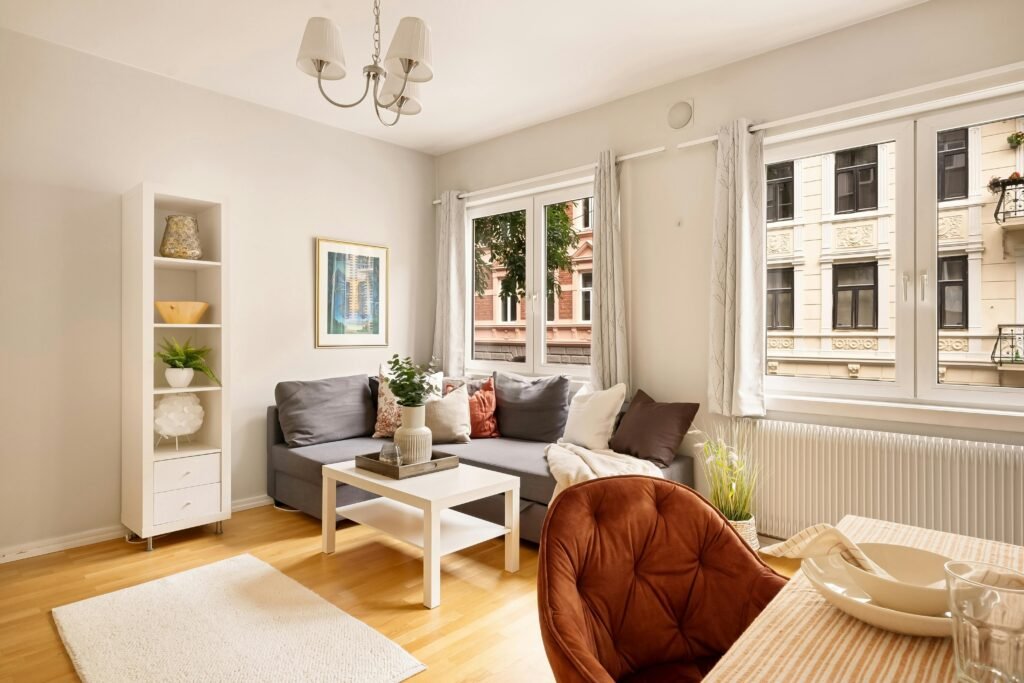
This might be the single most immediately impactful thing a long-term guest can do, and it’s the one people most hesitate to try.
A surprising number of Airbnb spaces are furnished with more thought given to the photographs than to how anyone actually lives in them. Couches face walls rather than windows. Dining tables sit in corners that make it awkward to get in and out from both sides. TVs are mounted on walls at angles that don’t correspond to where any of the seating actually is — often far too high, at a neck-craning angle that’s fine for a quick evening in but genuinely uncomfortable over weeks. Rooms that could feel spacious are cramped by too much furniture that nobody needs, placed without any clear logic.
We’ve rearranged furniture in more Airbnbs than we can count. Sometimes it’s a small shift — moving the sofa a metre to the left so it actually faces the TV. Sometimes it’s more significant — pushing a table into a different corner to open up the walking space, or removing a piece of furniture that was blocking natural light and putting it in a bedroom wardrobe.
The result, almost every time, is immediate. The space suddenly makes sense. It feels less like a storage room with a bed in it and more like somewhere a person lives.
A few things worth knowing: most hosts are completely fine with guests rearranging furniture for a long stay, as long as you put things back before you leave and communicate openly. If in doubt, drop the host a quick message through the app mentioning what you’re thinking of moving and why. In years of doing this, we’ve never had a host object.
What to look at on arrival:
- Does the seating face the TV, and is the TV at a comfortable height for extended watching?
- Is there a clear, logical path through the main living area without weaving around furniture?
- Does the dining area work for two people eating and, if relevant, working from a laptop?
- Is there unnecessary furniture taking up space that could simply be moved to a bedroom or out of the way?
Ten minutes of rearranging can transform a stay. It’s worth doing on day one.
Hand Towels: The Small Missing Item That Becomes Daily Irritation
This sounds minor until you’re three weeks into a stay and have still not resolved it.
Hand towels are not standard in many short-term Airbnb listings. Hosts who set up their space with weekend guests in mind often provide bath towels and not much else, on the logic that guests are only there for a night or two and don’t need the full domestic setup. That logic breaks down entirely when you’re staying for months.
We’ve asked hosts for hand towels on long stays and been told, with genuine puzzlement, that the property is designed for short-term guests and they don’t provide them. This is a response that doesn’t quite hold up — if someone is staying for three months, the needs of the stay are fundamentally different from a two-night weekend booking — but it happens more than you’d expect.
Our solution, and one we’d recommend to any long-term Airbnb guest: buy a couple of inexpensive hand towels locally in the first few days. A basic set from a supermarket or home goods shop costs very little and makes a noticeable difference to how the bathroom feels every single day. If you have room in your luggage when you leave, take them with you to the next location. If you don’t, you’ve spent a few euros for three months of daily comfort. That’s almost always worth it.
The same logic applies to a few other small domestics that short-term listings routinely skip: a bathmat that’s actually absorbent, a dish cloth that isn’t falling apart, a decent kitchen sponge. These cost almost nothing, transform the experience of using the space daily, and travel easily if they’re worth keeping.
Towels: Ask Early, Ask Directly, and Don’t Feel Guilty About It
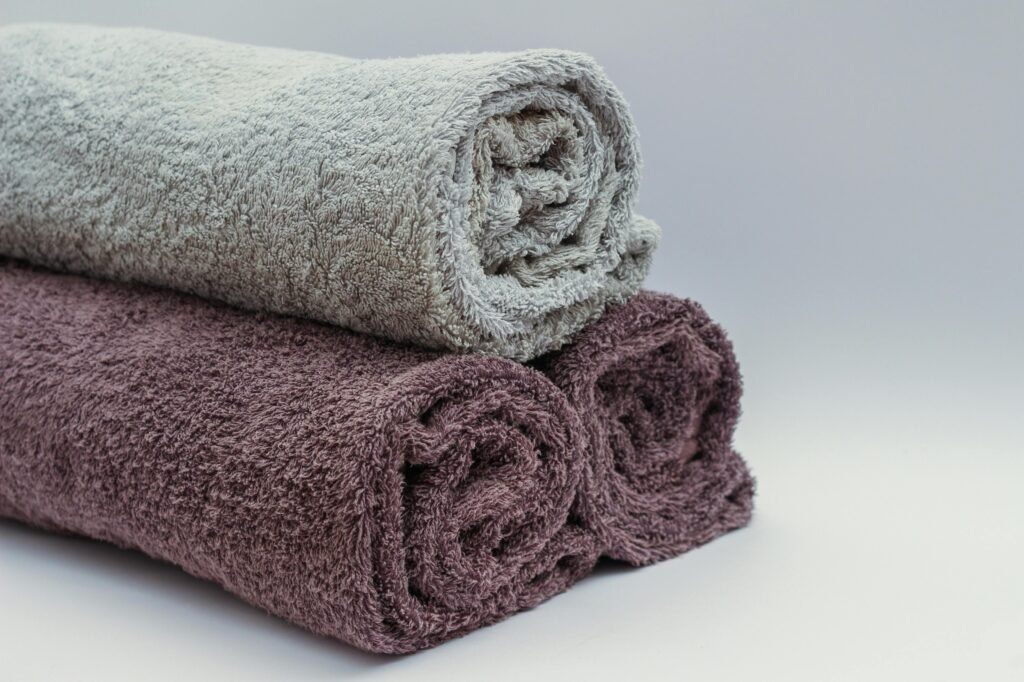
The towel situation in long-term Airbnb stays deserves its own section, because it comes up so consistently and creates so much unnecessary discomfort.
Many Airbnbs that work perfectly well for short stays are equipped with enough towels for a weekend. For a three-month stay, “enough towels for a weekend” means you’re doing laundry every two days or living with perpetually damp towels that never quite dry before you need them again. Neither is acceptable when this is your home for a quarter of the year.
There’s also the age question. Towels that have been in service in a short-term rental for two or three years tend to have a particular quality to them — thin, slightly rough, and occasionally carrying a faint smell that no amount of washing quite removes. You notice it immediately on a short stay and adapt. You notice it for months on a long one.
Ask about towels before you arrive or on your first day. Ask how many sets are available, and whether there are spares. If the answer doesn’t seem adequate for the length of your stay, say so — politely, through the app, with a specific request. Most hosts who are responsive and professional will find a solution. If they don’t, it’s worth knowing that early.
For stays of three months or more, we’d genuinely suggest bringing one set of towels you trust — a towel you actually like using, that you know is clean and comfortable. It takes up space in a bag but pays off every morning for the next twelve weeks.
Spare Bedding: The Difference Between Coping and Actually Being Comfortable
Washing your own bedding during a long stay is entirely normal and usually preferable — you’re living there, and having clean bedding on your own schedule is part of what makes a space feel like yours. But to do that comfortably, you need a spare set. One set of bedding means either sleeping on a bare mattress while things dry, or leaving the washing for a day when you can guarantee turnaround time. Neither is ideal.
Ask the host on arrival whether there’s a spare set of sheets and pillowcases available. In many cases there is, kept in a wardrobe or cupboard — it just hasn’t been mentioned. If there isn’t, it’s worth raising as a specific request for a long stay. Alternatively, a cheap set of sheets from a local shop is a small investment that removes a logistical headache for the entire duration.
Working From Home: The Comfort Details That Actually Matter

If you’re working remotely during a long Airbnb stay — which is increasingly common and probably describes a significant proportion of long-term guests — the comfort standards you need are closer to “home office” than “holiday accommodation.” And most short-term Airbnbs are not set up with that in mind.
The things that matter most for working from home in a long-term rental:
A desk or table at the right height. Dining tables are usually fine for occasional laptop work. For eight hours a day, five days a week, the height and the chair that comes with it matter significantly. If the setup isn’t working after the first few days, rearrange or ask the host whether there’s an alternative.
Natural light without glare. A workstation that puts a window directly behind or in front of a screen creates eye strain over weeks. It’s usually fixable with a small positional change.
A reliable, fast internet connection. This should be checked on day one, not week three. If the connection drops, is slower than listed, or becomes unreliable at certain times of day, raise it immediately. A slow connection is manageable for a short stay; for a working long stay it’s a genuine problem.
Somewhere comfortable to be that isn’t the desk. When you work from home in any space, the separation between work and rest environments matters more than it does on holiday. A comfortable sofa, a reading chair, anywhere that isn’t the work surface — even a small change of scene within the apartment helps maintain that separation.
The Mindset Shift That Makes All of This Easier
Long-term Airbnb guests sometimes carry a guest mindset into stays that really call for a resident mindset. You’re not visiting for the weekend. You’re not trying to leave everything exactly as you found it and minimise your impact. You’re living there — and living there well, for months, is both your right as someone who has paid for the space and in the host’s interest too.
Rearranging furniture so the space works for you, buying a hand towel, asking for adequate bedding, making small adjustments to feel at home — none of these are demanding behaviours. They’re the normal acts of someone who is treating a temporary space like a real home, which is exactly what it needs to be.
The guests who are happiest in long-term Airbnb stays are not the ones who quietly adapt to whatever they find. They’re the ones who arrive, assess what would make the space work for them, make the changes they can make themselves, ask clearly for the ones that require the host’s help, and settle in with intention rather than waiting to feel at home by accident.
Also check out:
- Why Airbnb Guests Should Document Everything on Arrival
- Airbnb Guest Essentials Checklist
- Moving to Tbilisi as an EU/Non-EU Couple: Honest Guide
Because when your Airbnb feels more like home, everyone wins.