One of the questions we get asked most by people considering long-term Airbnb living is surprisingly practical: what do you actually eat? How do you cook properly in a temporary kitchen, in a country where you don’t know the shops, where the ingredients you’re used to either don’t exist or cost three times what they should?
The honest answer is that it depends — on the country, on the kitchen, on whether you’re cooking for one or two, and on how much you’re willing to adapt. But after years of long-term Airbnb living across Europe, Asia, and beyond, we’ve developed an approach that works consistently regardless of where we are. Here’s what that looks like.
Cook for Where You Are, Not Where You’re From
The single biggest mistake long-term Airbnb travellers make with food is trying to replicate their home cooking in a country where the ingredients for it either don’t exist or are prohibitively expensive.
We learned this the hard way. In several countries — Serbia, North Macedonia, and Georgia among them — we struggled to find green beans, leafy greens, and the variety of fresh vegetables we were used to cooking with. What was available was sometimes poor quality, sometimes expensive, and sometimes simply absent from the market entirely.
The shift that changed everything was stopping trying to cook what we knew and starting to cook what was abundant and affordable where we were. Every country has its staples — the produce that’s cheap, fresh, and everywhere because it grows locally and sells in volume. Find those, and build your cooking around them.
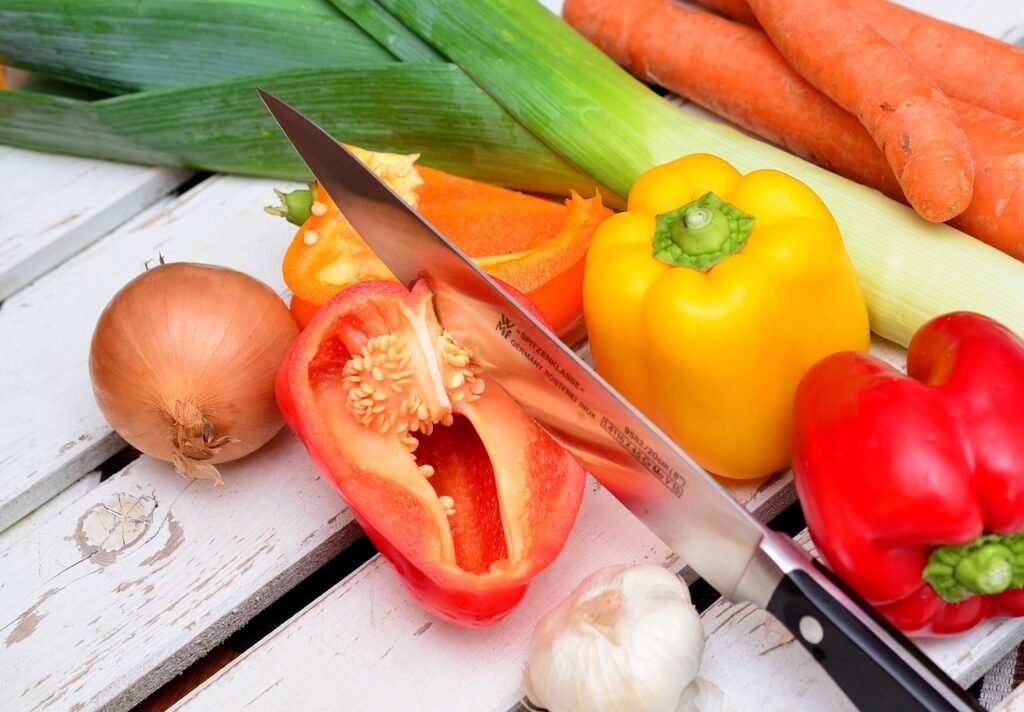
In the Balkans and Georgia, that meant potatoes, carrots, onions, peppers, and tomatoes. In Southeast Asia, it meant different greens entirely, plus ingredients we hadn’t cooked with much before. In each case, the same approach applied: go to the market or the supermarket first, see what looks good and costs little, and then decide what to cook — not the other way around.
The Base Vegetables That Work Almost Everywhere
Over years of cooking in temporary kitchens across different countries, a core set of vegetables has proven reliably available, affordable, and versatile enough to form the base of almost anything:
Potatoes — available almost everywhere, very affordable, and endlessly flexible. Roasted, boiled, fried, added to curries and stews. A bag of potatoes is one of the most reliable purchases you can make in any country.
Carrots — similarly universal and inexpensive. They keep well in the fridge, add body to almost any dish, and work in everything from a simple stir-fry to a slow-cooked curry.
Onions and garlic — the foundation of most cooking worldwide. Cheap, available everywhere, and long-lasting. Never skip these.
Peppers — green, red, or yellow depending on what’s available and what’s reasonably priced. Peppers add colour, flavour, and substance to rice dishes, pasta, and anything cooked in a pan.
Tomatoes — brilliant when they’re good and affordable, frustrating when they’re expensive or flavourless. When fresh tomatoes are priced out of reach, tinned tomatoes are a perfectly reasonable substitute for cooked dishes — they’re not the same in flavour for eating raw, but for pasta sauces, curries, and stews they work just as well.
Courgette — not universally available, but worth buying when you see it. It cooks quickly, pairs with almost anything, and adds volume to a meal without much cost.
Frozen mixed vegetables — this one is underrated and worth mentioning specifically. In countries where fresh greens are hard to find or expensive, a bag of frozen mixed vegetables solves the problem immediately. Nutritionally sound, easy to store, quick to cook, and available in virtually every supermarket worldwide. We’ve relied on these more than once during stays where fresh greens were simply not an option.
The Spice and Condiment Kit That Travels With Us
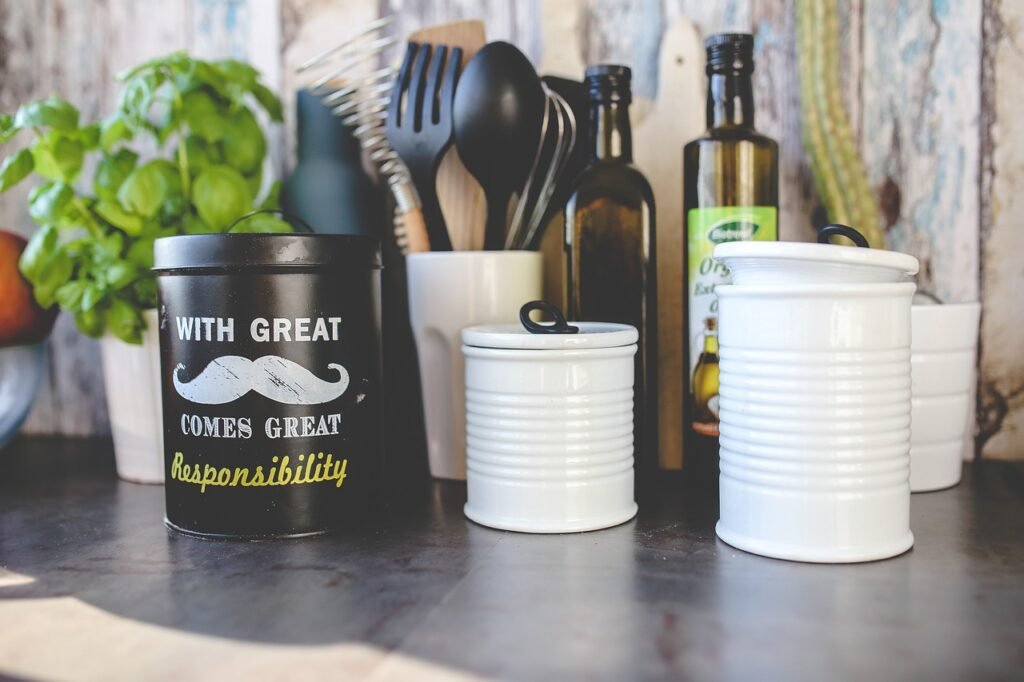
A well-stocked spice collection transforms basic ingredients into proper meals. The challenge when living in Airbnbs is that you don’t always want to buy a full jar of something you’ll use twice and leave behind. Over time we’ve settled on a small core set that covers an enormous range of dishes and is worth buying fresh in each country:
- Salt and black pepper — the non-negotiables
- Paprika powder — adds warmth and depth to almost anything savoury
- Curry powder — one jar covers a wide range of dishes and lasts for weeks
- Chilli flakes or hot sauce — depending on what’s available locally; both work
- Soy sauce — essential for fried rice, stir-fries, and adding umami depth to sauces
- Olive oil — the primary cooking fat for most of what we make
- Vinegar — rice vinegar or apple cider vinegar; useful for dressings, marinades, and balancing flavours
This combination covers pasta dishes, fried rice, curries, roasted vegetables, stir-fries, and simple salads. It’s a small investment that dramatically expands what you can cook with whatever fresh produce is available.
The Kitchen Equipment Reality
Not every Airbnb kitchen is properly equipped — and this is especially true in parts of Asia, where kitchens are sometimes minimal or primarily designed for reheating rather than full cooking. We’ve arrived at apartments with a single small pan, no lid, no spatula, and a knife that needed replacing.
For basic cooking, you genuinely only need three things: a frying pan, a regular saucepan, and a spatula. With those three items you can make virtually everything in this guide.
If your Airbnb doesn’t have them, you have two options:
Ask the host first. Be specific — not “do you have kitchen equipment” but “is there a frying pan, a saucepan, and a spatula available?” Specific questions get specific answers. We’ve heard no more than once, but we’ve also been pleasantly surprised by hosts who simply hadn’t thought to mention what was in the kitchen.
Buy what you need locally. In most countries, basic kitchen equipment from a supermarket or household goods shop is inexpensive. A simple frying pan and a spatula can cost less than a restaurant meal. If you know you’re going to be cooking regularly for the next three months, the investment is obviously worth it.
What to Do With Things You’ve Bought When You Leave
This is something almost no guide about long-term Airbnb living addresses, and it deserves its own section because it comes up every single stay.
Over the years we’ve bought various items to make a stay more comfortable — a coffee pot, a clothes drying rack, kitchen equipment, small household items. When it’s time to leave, you face a choice: pack it, leave it, or find it a better home.
Our approach, in order of preference:
Find a local charity first. If there’s a charity shop, a food bank, a community organisation, or a church nearby, that’s always our first choice. A clean, usable coffee pot or a set of kitchen utensils can genuinely make a difference to someone who needs it. The key word is usable — only donate things that are clean and in good working condition. A charity doesn’t benefit from receiving something that needs to go straight in the bin.
Leave it for the host if no charity is available. If we can’t find a suitable charity before checkout, we leave the item in the apartment and mention it specifically in our review. Not as a complaint — as information. Something like: “We bought a clothes drying rack and a coffee pot for our stay and left them for future guests — hopefully useful additions.”
This serves two purposes. It’s genuinely useful for future guests. And it also, indirectly, communicates to the host something important: that a long-term guest needed these items and they weren’t there. A host who reads that and thinks about it might add a clothes rack before the next booking. That’s a small piece of education that improves things for everyone — the next guest, the host’s reviews, and the broader experience of long-term Airbnb living.
Hosts who understand what long-term guests actually need will always have better long-term booking rates. Sometimes the most useful thing you can leave behind isn’t the coffee pot — it’s the review that explains why it mattered.
Cooking for One vs Two. The Practical Difference
If you’re living alone in an Airbnb long-term, the approach is simpler: smaller quantities, less variety needed, easier to avoid waste. A single person cooking for themselves can get away with buying very little and eating well with minimal planning.
For two people, the main adjustment is portion sizing and the rotation of meals. Cooking a larger batch of something — a pasta sauce, a vegetable curry, a pot of rice — and eating from it across two days reduces both cost and the daily effort of deciding what to cook. This approach works particularly well in smaller kitchens where cooking elaborate meals every night isn’t practical anyway.
The base vegetables and spice kit above work for both scenarios — just adjust quantities accordingly.
The Underlying Principle
Long-term Airbnb cooking works best when you let go of the idea of replicating your home routine and instead treat each country as a new set of ingredients to explore. The vegetables that are cheap and fresh where you are right now are almost certainly the basis of the local cooking — which means there are dishes built around them worth learning, markets worth exploring, and a way of eating that fits the place you’re in.
That flexibility — cooking with what’s available rather than searching for what’s familiar — is one of the small but real pleasures of living this way. It’s also one of the most practical things you can do for your budget, your nutrition, and your sanity in a temporary kitchen.
Also check out:
- How to Feel at Home in an Airbnb (Long-Term Stay Guide)
- Airbnb Weekly Meal Planner — Free Download
- Printable Recipe Cards for Airbnb Stays
- Moving to Tbilisi as an EU/Non-EU Couple: Honest Guide
Because when your Airbnb feels more like home, everyone wins.